Results of the 2008 National Achievement Test (NAT) for Grade 6 pupils in
public schools showed an increase in mean percentage score (MPS) of 5 %
over the 2007 results -- from 59.94% to 64.81% in 2008 or an improvement of
8%, bringing the Department of Education closer to its target of 75 % MPS by
2010, the department said.
The nationwide NAT given in March 2008 was taken by 1.64 million pupils in
some 30,396 schools. The five subject areas have 40 items each for a total of
200 items. “The key reforms and well-focused policy directions to improve basic
education are slowly but surely bearing fruit,” Education Secretary Jesli Lapus
said.
The results also disclosed that the number of pupils with low mastery (score of
15 to 34%) have decreased from 8.18% in 2007 to 3.67% in 2008 while those
students moving towards mastery increased by 10.36% from 38.72% in 2007
to 49.08 % in 2008.
Schools with low mastery decreased from 3 in every 100 elementary schools
in 2007 to 1 in every 100 elementary schools this year.
In the key subjects tested, students showed the biggest improvement in
Science with a percentage increase of 12.26%, from an MPS of 51.58% in
2007 to 57.90% in 2008. It was followed by big strides in Filipino and HEKASI
which posted an improvement of 10.84% and 10.47 % respectively.
Overall, the average increment in MPS in Math, Science and English among
Grade 6 students was 6.24 %, from last year’s MPS of 44.29% to 47.67% this
year. “We are slowly earning dividends from our investment in public education and
we have our hardworking DepEd family and our private sector partners to
thank for,” Lapus added.
OSEC COMMUNICATIONS | DEPED COMPLEX, MERALCO AVENUE, PASIG CITY 1600
TELEPHONE (02) 6316033 | FAX (02) 6364876 | EMAIL depedcommunications@gmail.com
DepEd has been concentrating its human and financial resources on key
performance indicators in basic education. It embarked on a host of
intervention programs aimed at improving classroom instruction. These include
the Every Child a Reader Program, continuing teacher training in teaching
English, priority in hiring teachers who have majored in Math, Science and
English, provision of one book each for every student in core subjects, food
for school program and Project TURN or Turning Around Low Performance in
English, among others.
Friday, June 27, 2008
School Damaged byTyphoon Frank
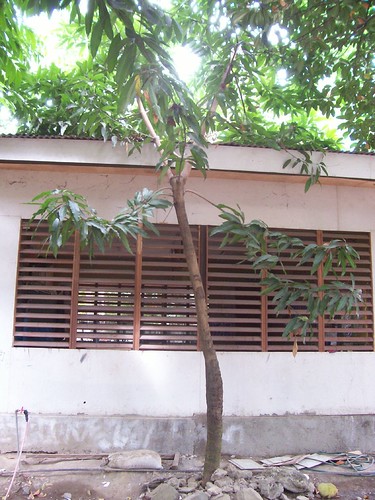
In its latest update on the extent of damage brought by Typhoon Frank, the Department of Education reported that the estimated cost of damages in school buildings has reached over P303 million involving 458 damaged schools.
Region 8 (Eastern Visayas) is the hardest hit with 116 damaged schools. The
cost of damage is estimated at P118 million. To start immediate rehabilitation work, DepEd has submitted a request to the National Disaster Coordinating Council through the Department of National Defense for the release of initial funding amounting to P300 million for the
replacement/repair/ rehabilitation of classrooms affected by typhoon Frank. Aside from the National Capital Region which has 21 affected school buildings with damages placed at almost P38 million, the other region heavily affected by typhoon “Frank” was Region 6 which reported a total of 141 damaged schools with an estimated cost of some P30.3 million.
Region 4-B suffered from damages worth some P29 million arising from 56 destroyed schools while Region 4A has 30 affected schools whose estimated cost of damage amounted to P26.4 million.
Region 1 reported 42 damaged schools with estimated cost of damage at P24.5
million while Region 3 has 36 schools needing immediate rehabilitation.
Damage estimate is placed at P20.7 million.
Lapus ordered immediate rehabilitation work to lessen impact on the holding of classes. “Repair and rehabilitation works should proceed promptly so as to minimize disruption in classes,” Lapus added. Lapus reported that some 133 schools in the affected regions are being used as
evacuation centers by some 1,291 families.
DepEd has set up a Calamity Information Center at its central office in Pasig City where updates and damage reports from the regions affected by typhoon “Frank” are consolidated for appropriate action. “We continue to do onsite assessment and validation of reported damages,”
Sunday, June 15, 2008
No Cost Basic Education
“The Department of Education is determined to put every school-aged child in
school at no cost,” DepEd Secretary Jesli A. Lapus announced to members of
the media gathered at the Friday Balitaan sa Hotel Rembrandt yesterday.
Lapus’ reiteration of his Department’s No Collection of Fees policy comes a few
days before the June 10 opening of classes in the elementary and high school
levels next week.
Working under the framework of the United Nations Educational, Scientific, and
Cultural Organization’s (UNESCO) goal of Education for All, the DepEd has
removed several obstacles that prevent a child from being in school.
Addressing the problem on the high cost of education, the DepEd’s emphasis on
the no collection of fees policy is in line with the Philippine Constitutional
school at no cost,” DepEd Secretary Jesli A. Lapus announced to members of
the media gathered at the Friday Balitaan sa Hotel Rembrandt yesterday.
Lapus’ reiteration of his Department’s No Collection of Fees policy comes a few
days before the June 10 opening of classes in the elementary and high school
levels next week.
Working under the framework of the United Nations Educational, Scientific, and
Cultural Organization’s (UNESCO) goal of Education for All, the DepEd has
removed several obstacles that prevent a child from being in school.
Addressing the problem on the high cost of education, the DepEd’s emphasis on
the no collection of fees policy is in line with the Philippine Constitutional
DepEd Prescribes Proper School Attire
While the Department of Education does not require the wearing of uniform in all
public elementary and high school to ease the financial burden of parents, it
came up with guidelines on what constitutes proper school attire.
Education Secretary Jesli Lapus said the school attire should reflect respect for
the school as an institution for learning and should not be a cause for
discrimination particularly for students belonging to a lower socio-economic
status.
“A student’s basic right to school to study and learn is of paramount importance
and should be respected and promoted at all times,” Lapus added.
In keeping with these guidelines, DepEd prescribes for boys a polo shirt/t-shirt
with sleeves of any plain color or with minimum prints. Pants can be long or
short of any color. For girls, it can be a dress, skirt and blouse, blouse and pants
of any color and any print. Boys and girls can wear any footwear.
The directive also reiterates that students with existing uniforms can still wear
them if they so desire.
Students are discouraged from wearing expensive (signature or designer
brands) or flashy clothes, tight-fitting pants/blouses/dresses, mini skirts, short
shorts, blouses with plunging necklines, hip-hop pants for boys and sleepwear.
Lapus stressed that promoting hygiene and proper school decorum is part of the
teaching-learning process in schools. “Thus, a student’s attire and physical
appearance should manifest the learning from this process, “Lapus pointed out.
DepEd Order No. 45 s. 2008 states that public elementary and secondary
schools are not required to wear school uniforms. The order is aimed at
increasing school participation of school-aged children by removing any
obstacles to enrolment particularly those financial in nature.
The identification card of public school children shall also be given at no cost to
the child or parent. School authorities will source funding for this from their
maintenance and other operating expenses.
public elementary and high school to ease the financial burden of parents, it
came up with guidelines on what constitutes proper school attire.
Education Secretary Jesli Lapus said the school attire should reflect respect for
the school as an institution for learning and should not be a cause for
discrimination particularly for students belonging to a lower socio-economic
status.
“A student’s basic right to school to study and learn is of paramount importance
and should be respected and promoted at all times,” Lapus added.
In keeping with these guidelines, DepEd prescribes for boys a polo shirt/t-shirt
with sleeves of any plain color or with minimum prints. Pants can be long or
short of any color. For girls, it can be a dress, skirt and blouse, blouse and pants
of any color and any print. Boys and girls can wear any footwear.
The directive also reiterates that students with existing uniforms can still wear
them if they so desire.
Students are discouraged from wearing expensive (signature or designer
brands) or flashy clothes, tight-fitting pants/blouses/dresses, mini skirts, short
shorts, blouses with plunging necklines, hip-hop pants for boys and sleepwear.
Lapus stressed that promoting hygiene and proper school decorum is part of the
teaching-learning process in schools. “Thus, a student’s attire and physical
appearance should manifest the learning from this process, “Lapus pointed out.
DepEd Order No. 45 s. 2008 states that public elementary and secondary
schools are not required to wear school uniforms. The order is aimed at
increasing school participation of school-aged children by removing any
obstacles to enrolment particularly those financial in nature.
The identification card of public school children shall also be given at no cost to
the child or parent. School authorities will source funding for this from their
maintenance and other operating expenses.
DepEd walks the talk on textbook delivery
The Department of Education (DepEd) and Ateneo School of Government
recently launched the Textbook Watch Project at the Ortigas Business District.
The project seeks to engage communities to take part in the delivery of
textbooks in publics.
Education Secretary Jesli Lapus lauded the “bayanihan spirit” that has made
recent DepEd initiatives successful. “Talking about DepEd is talking about the
Filipinos’ time-tested and honored value of the Bayanihan. Through the
Textbook Walk, DepEd and Philippine civil society are walking the talk on
textbooks,” he said.
Under Textbook Watch is Textbook Walk, which aims to gather support from
school and community-based organizations and stakeholders – such as Parent
Teacher Community Associations, local government units, and barangay
officials – in bringing the required quantity of books to elementary schools by
sharing their time, effort, and resources.
Together with DepEd is Ateneo de Manila University – School of Government’s
Government Watch or G-Watch Program. Ateneo’s G-Watch has been working
with DepEd to reform the system governing the procurement and delivery of
textbooks.
“Hopefully, under the Textbook Walk, we can all work together to produce more
meaningful and updated learning materials for our young learners today and in
the future,” said Lapus.
As part of the Textbook Walk launch, Lapus will send off several delivery trucks
carrying textbooks on June 12 at the Mabini House at Polytechnic University of
the Philippines. These books are part of the recent procurement that underwent
the new multilevel textbook review and unbundled bidding process.
recently launched the Textbook Watch Project at the Ortigas Business District.
The project seeks to engage communities to take part in the delivery of
textbooks in publics.
Education Secretary Jesli Lapus lauded the “bayanihan spirit” that has made
recent DepEd initiatives successful. “Talking about DepEd is talking about the
Filipinos’ time-tested and honored value of the Bayanihan. Through the
Textbook Walk, DepEd and Philippine civil society are walking the talk on
textbooks,” he said.
Under Textbook Watch is Textbook Walk, which aims to gather support from
school and community-based organizations and stakeholders – such as Parent
Teacher Community Associations, local government units, and barangay
officials – in bringing the required quantity of books to elementary schools by
sharing their time, effort, and resources.
Together with DepEd is Ateneo de Manila University – School of Government’s
Government Watch or G-Watch Program. Ateneo’s G-Watch has been working
with DepEd to reform the system governing the procurement and delivery of
textbooks.
“Hopefully, under the Textbook Walk, we can all work together to produce more
meaningful and updated learning materials for our young learners today and in
the future,” said Lapus.
As part of the Textbook Walk launch, Lapus will send off several delivery trucks
carrying textbooks on June 12 at the Mabini House at Polytechnic University of
the Philippines. These books are part of the recent procurement that underwent
the new multilevel textbook review and unbundled bidding process.
DepEd reports successful opening of classes
The Department of Education (DepEd) Information and Action Center (IAC) today
reported a weeklong successful opening of classes for school year 2008-09.
Through the IAC, DepEd provided a quick response to queries, complaints and
requests from the public during the hectic back-to-school week from June 2 to 13.
Education Secretary Jesli Lapus observed that there were less calls received this
year and attributes this to the “active information drive of the department to
assure the public of its policies and programs.”
He added, “Once again we have proven to our public that the Department of
Education is one big action center.”
During its first week, there were 240 cases received, of which 41% were
requests, 33% complaints and 25% were inquiries. Meanwhile, 374 cases were
received last year, of which 63% were complaints, 28% inquiries and 10%
requests. A consolidated report including those from the regions is still being
processed.
Most complaints received were on the collection of fees by some schools. Prior to
school opening, DepEd issued strict orders for school heads to refrain from
collecting fees as a requisite for enrollment. Education Secretary Jesli Lapus
stressed that the DepEd will not tolerate illegal practices in public schools.
Meanwhile, most inquiries were on the accreditation tests that were offered free,
in time for the 2008 Independence Day celebration. Of the requests received by
the IAC, most were on admission to public high schools.
DepEd regional directors and schools division superintendents were directed to
designate two action officers to oversee regional and local concerns similar to
IAC in the central office.
Education Undersecretary for Regional Affairs and IAC Officer Ramon Bacani
noted the importance of evaluating the nature of the complaints, inquiries and
requests that IAC received from the public, and the manner with which the
Department responded to these cases. He added, “Let it be clear that today is not
the end of the action center as it is an ongoing activity.”
He expressed gratitude to those who worked at the IAC in the DepEd Central
Office as well as in the regions, “for their patience, resourcefulness, and courtesy
to our public.”
reported a weeklong successful opening of classes for school year 2008-09.
Through the IAC, DepEd provided a quick response to queries, complaints and
requests from the public during the hectic back-to-school week from June 2 to 13.
Education Secretary Jesli Lapus observed that there were less calls received this
year and attributes this to the “active information drive of the department to
assure the public of its policies and programs.”
He added, “Once again we have proven to our public that the Department of
Education is one big action center.”
During its first week, there were 240 cases received, of which 41% were
requests, 33% complaints and 25% were inquiries. Meanwhile, 374 cases were
received last year, of which 63% were complaints, 28% inquiries and 10%
requests. A consolidated report including those from the regions is still being
processed.
Most complaints received were on the collection of fees by some schools. Prior to
school opening, DepEd issued strict orders for school heads to refrain from
collecting fees as a requisite for enrollment. Education Secretary Jesli Lapus
stressed that the DepEd will not tolerate illegal practices in public schools.
Meanwhile, most inquiries were on the accreditation tests that were offered free,
in time for the 2008 Independence Day celebration. Of the requests received by
the IAC, most were on admission to public high schools.
DepEd regional directors and schools division superintendents were directed to
designate two action officers to oversee regional and local concerns similar to
IAC in the central office.
Education Undersecretary for Regional Affairs and IAC Officer Ramon Bacani
noted the importance of evaluating the nature of the complaints, inquiries and
requests that IAC received from the public, and the manner with which the
Department responded to these cases. He added, “Let it be clear that today is not
the end of the action center as it is an ongoing activity.”
He expressed gratitude to those who worked at the IAC in the DepEd Central
Office as well as in the regions, “for their patience, resourcefulness, and courtesy
to our public.”
4th Pambansang Gawad sa Ulirang Kabataan
Five students from among 31 high school nominees from public and private
schools were chosen winners in the Fourth Pambansang Gawad sa Ulirang
Kabataan by the Department of Education – Special Events Unit at the DepEd
SENTRO K3 Exhibit Area, Luneta Park, Manila today.
The winners are Paul Julian Hao of Chiang Kai Shek College, Manila, National
Capital Region (NCR); Benralph Yu of Davao City National High School, Davao
City, Region 11; Stephen Panol of Fort Bonifacio High School, Makati City,
National Capital Region (NCR); Jamil Repors of Kidapawan National High
School, Kidapawan City, Region 12; and Kate Marie Benitez of Samal National
High School, Region 11.
The awardees are all achievers, leaders and active community workers. All
graduated with top honors in their secondary schools last year.
schools were chosen winners in the Fourth Pambansang Gawad sa Ulirang
Kabataan by the Department of Education – Special Events Unit at the DepEd
SENTRO K3 Exhibit Area, Luneta Park, Manila today.
The winners are Paul Julian Hao of Chiang Kai Shek College, Manila, National
Capital Region (NCR); Benralph Yu of Davao City National High School, Davao
City, Region 11; Stephen Panol of Fort Bonifacio High School, Makati City,
National Capital Region (NCR); Jamil Repors of Kidapawan National High
School, Kidapawan City, Region 12; and Kate Marie Benitez of Samal National
High School, Region 11.
The awardees are all achievers, leaders and active community workers. All
graduated with top honors in their secondary schools last year.
Five students from among 31 high school nominees from public and private
schools were chosen winners in the Fourth Pambansang Gawad sa Ulirang
Kabataan by the Department of Education – Special Events Unit at the DepEd
SENTRO K3 Exhibit Area, Luneta Park, Manila today.
The winners are Paul Julian Hao of Chiang Kai Shek College, Manila, National
Capital Region (NCR); Benralph Yu of Davao City National High School, Davao
City, Region 11; Stephen Panol of Fort Bonifacio High School, Makati City,
National Capital Region (NCR); Jamil Repors of Kidapawan National High
School, Kidapawan City, Region 12; and Kate Marie Benitez of Samal National
High School, Region 11.
The awardees are all achievers, leaders and active community workers. All
graduated with top honors in their secondary schools last year.
schools were chosen winners in the Fourth Pambansang Gawad sa Ulirang
Kabataan by the Department of Education – Special Events Unit at the DepEd
SENTRO K3 Exhibit Area, Luneta Park, Manila today.
The winners are Paul Julian Hao of Chiang Kai Shek College, Manila, National
Capital Region (NCR); Benralph Yu of Davao City National High School, Davao
City, Region 11; Stephen Panol of Fort Bonifacio High School, Makati City,
National Capital Region (NCR); Jamil Repors of Kidapawan National High
School, Kidapawan City, Region 12; and Kate Marie Benitez of Samal National
High School, Region 11.
The awardees are all achievers, leaders and active community workers. All
graduated with top honors in their secondary schools last year.
Subscribe to:
Posts (Atom)
Featured Post
40 sample questions for a Principal Qualifying Examination (PQE) or school head promotion screening in the Philippines
40 sample questions for a Principal Qualifying Examination (PQE) or school head promotion screening in the Philippines. These focus on lea...
